
Rajkumar Hirani is one of the rare filmmakers in Hindi cinema who understands that audiences do not reject depth, they reject being preached to. His films never arrive as lectures. They arrive as stories that make you laugh first, sit comfortably with the characters, and only then begin to ask questions that stay long after the screen fades to black.
At a time when cinema often chooses spectacle over sincerity, Hirani has consistently trusted emotion, simplicity, and storytelling. His films are not loud revolutions. They are quiet reminders of who we are and who we are becoming.
Comedy as a Soft Entry Point
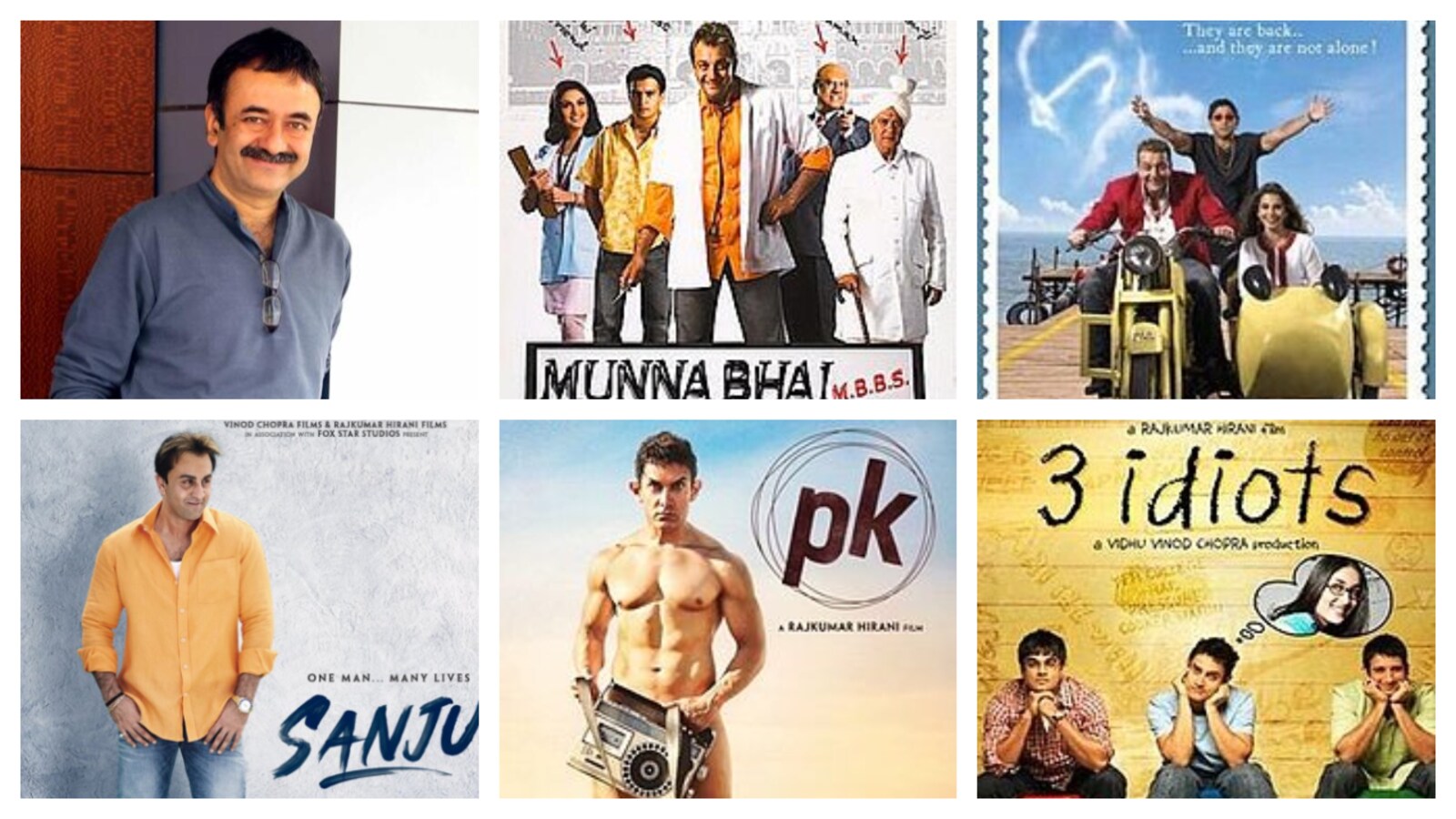
Hirani’s greatest strength lies in his use of humor as an emotional gateway. Munna Bhai M.B.B.S. could have easily been a slapstick comedy about a gangster pretending to be a doctor. Instead, it became a meditation on empathy within institutional systems. Through Munna, Hirani questioned the rigidity of medical education and the absence of compassion in spaces meant to heal.
The idea of jadoo ki jhappi was not a gimmick designed for laughs. It symbolized the need for human warmth in a world obsessed with credentials and hierarchy. Without ever sounding accusatory, the film gently asked whether professionalism had replaced kindness.
Reviving Gandhi Without Turning Him Into a Statue
With Lage Raho Munna Bhai, Hirani took on something even more ambitious. He reintroduced Mahatma Gandhi to a generation that had reduced him to currency notes and textbooks. Instead of glorifying Gandhi as an untouchable icon, Hirani turned him into a conversational presence, a moral compass navigating everyday dilemmas.
The brilliance of the film lay in its accessibility. Gandhigiri was not portrayed as an abstract philosophy but as a practical approach to conflict. Hirani did not insist that the world change overnight. He simply suggested that truth and patience still had a place in modern chaos.
Questioning Success in a Competitive Society
3 Idiots became a cultural phenomenon because it articulated what an entire generation was feeling but rarely allowed to express. The film exposed the emotional cost of academic pressure, societal expectations, and the fear of failure in a system obsessed with rankings and results.
Rather than glorifying rebellion, Hirani focused on curiosity and questioning. Rancho was not positioned as a flawless hero but as someone who dared to ask why. The film’s lasting impact comes from its honesty. It acknowledged that success without happiness is hollow, and ambition without purpose is exhausting.
Faith, Fear, and the Courage to Ask Why
PK was perhaps Hirani’s most controversial work, not because it disrespected faith, but because it dared to question blind belief. Through the eyes of an outsider, the film examined how religion can be manipulated, commercialized, and weaponized.
What made PK effective was its innocence. The film never mocked devotion. It questioned intermediaries who profit from fear. Hirani maintained a delicate balance, addressing sensitive themes with humor and vulnerability instead of aggression. The result was a film that sparked discomfort but also encouraged dialogue.
Humanism at the Center of Every Story
Across all his films, one thing remains constant. Hirani believes deeply in people. His characters are flawed, confused, and often misguided, but never cruel without reason. Even antagonists are given emotional logic. This humanism is what makes his cinema resonate across age groups and ideologies.
He avoids cynicism. In a time when darkness is often mistaken for realism, Hirani continues to believe in hope without naivety. His optimism is not blind. It is earned through conflict, failure, and reflection.
Why Hirani’s Cinema Still Matters
Rajkumar Hirani’s films endure because they are rooted in emotion rather than trends. They do not chase relevance. They create it. His storytelling reminds us that cinema can be entertaining without being empty, meaningful without being heavy, and critical without being cruel.
In an industry increasingly driven by noise, Hirani’s quiet confidence stands out. He does not shout to be heard. He speaks softly and trusts that the message will land where it needs to.
And perhaps that is his greatest achievement. Making audiences laugh while gently asking them to look inward. Making films that feel like conversations rather than conclusions.