
There was a time when Hindi cinema trusted discomfort. When it believed that stories did not need approval to exist. Nishabd arrived in that space. Quiet. Provocative. Unapologetic. And far ahead of the emotional vocabulary its audience had access to in 2007.
Directed by Ram Gopal Varma, Nishabd was never meant to be easy viewing. It was meant to ask a question people did not want to answer. What happens when love arrives from the wrong place but feels real anyway.
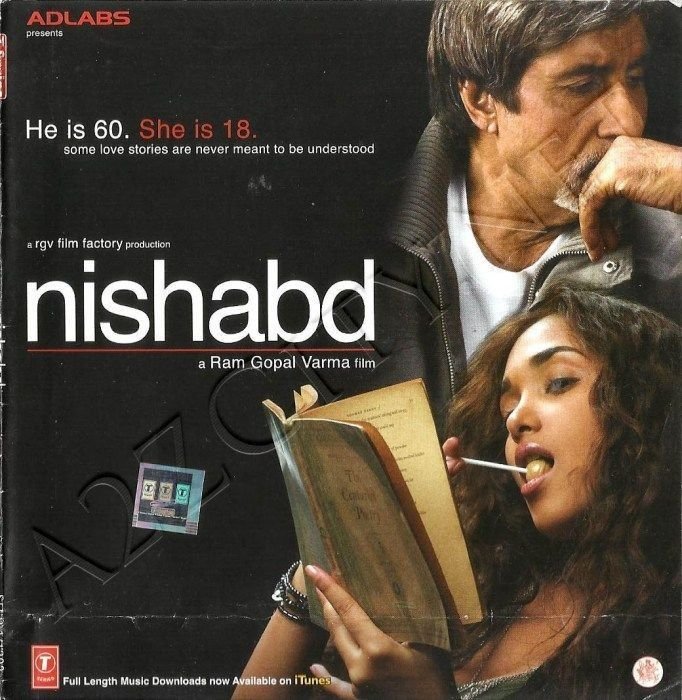
Jia Khan’s Debut Was Not Designed for Safety
For Jia Khan, Nishabd was not just a debut. It was a declaration. She did not enter cinema asking to be liked. She entered asking to be understood. Her character was not written as a temptress or a fantasy. She was written as a girl starving for affection. Neglected by emotionally absent parents. Unseen in her own home. Craving validation without knowing what it would cost her.
That hunger is what drives her toward a man old enough to be her father. Not because the film romanticises the age gap. But because it understands the psychology of abandonment. Jia’s performance carries that ache quietly. In her silences. In the way she looks for reassurance. In the way she mistakes attention for love.
It is a brave choice for a first film. One that today’s industry would never offer a newcomer. Especially not one without a famous surname cushioning the risk.
Ram Gopal Varma Did Not Flinch From Moral Complexity
What makes Nishabd unsettling is also what makes it honest. Ram Gopal Varma refuses to tell the audience how to feel. He does not frame the older man as a hero. Nor does he turn him into a caricature villain. He allows the discomfort to exist without resolution.
RGV’s storytelling here is restrained. Observational. Almost clinical. He understands that the most disturbing part of taboo relationships is not desire but denial. The characters are not monsters. They are flawed. Lonely. Weak. Human.
That is a level of trust filmmakers rarely place in audiences anymore.
Amitabh Bachchan Played Silence Like a Language
Amitabh Bachchan’s performance is built on restraint. His character is not chasing youth. He is resisting it. His guilt is visible long before his desire is acknowledged. The film allows him space to be uncomfortable with himself.
There are no grand declarations. No justification monologues. Just a man collapsing under emotions he does not know how to process.
This is old school acting. Where discomfort is allowed to breathe. Where silence speaks louder than dialogue.
Why Nishabd Feels Radical Even Today
What is startling is how relevant Nishabd feels now. Not because the subject is new. But because cinema has stopped trusting nuance. Today taboo topics are either sensationalised or sanitised. Reduced to shock value or moral lectures. Rarely explored with emotional intelligence.
Modern films often mistake boldness for provocation. Nishabd understood that true boldness lies in empathy. In refusing to flatten complex emotions into neat conclusions.
The film does not ask you to approve. It asks you to observe.
When Storytelling Mattered More Than Optics
There was a time when filmmakers risked reputations to tell stories that unsettled. When debuting actors were trusted with layered characters instead of launch vehicles. When cinema did not exist solely to manufacture stars.
Looking at the industry today it is hard not to notice the shift. Stories feel safe. Emotions feel manufactured. Characters feel interchangeable. The obsession with launching one nepo baby after another has drained cinema of curiosity.
Nishabd came from a time when storytelling came first. When discomfort was not edited out. When directors like Ram Gopal Varma believed that cinema could still provoke thought rather than chase validation.
Why We Need Films Like Nishabd Again
Nishabd was not perfect. It was not meant to be. But it was sincere. And sincerity is rare now. The film trusted its audience to sit with discomfort. To question morality without being spoon fed answers. To feel conflicted and leave the theatre unsettled.
That kind of cinema requires courage. From directors. From actors. From an industry willing to risk backlash in service of honesty.
Maybe that is why Nishabd feels like a relic of a braver Bollywood. One that believed stories could be complicated. That emotions could be messy. That not everything needed approval to exist.
Would a film like Nishabd even be made today.
And if it were. Would we be mature enough to watch it the way it deserves.